
Beginner's Project: Making an Awl - Page 1
Getting started with the awl
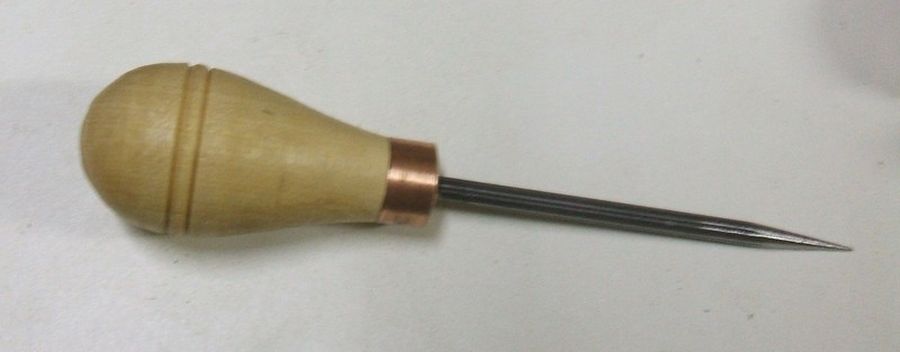
| Milton and Wohlers present an exercise of making an awl for the shop. This is one of the standards of spindle turning exercises. Another awl is always helpful for marking out projects and making appropriate starting holes and the like. This project uses the roughing gouge, parting tool and skew or spindle gouge. It demonstrates cutting to a diameter and forming beads and coves as well as fitting a ferrule. |
|
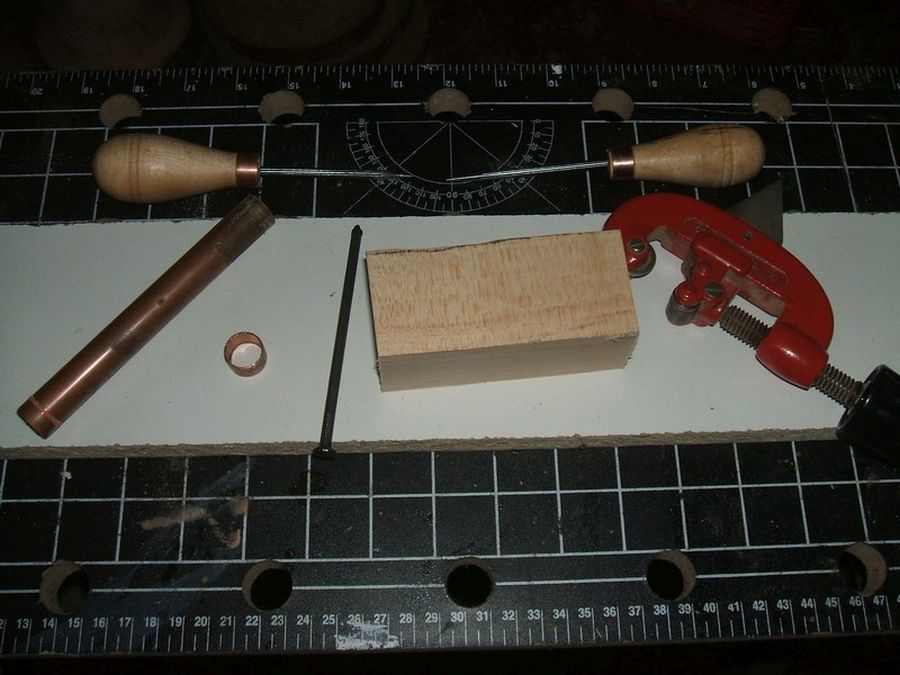
| For this project I have selected a piece of maple from the stash. There are cracks in this piece but I will be able to cut the appropriate blank for the handle. In addition to the usual lathe tools I have a pipe cutter along with a section of 1/2" copper pipe, and a 4 1/2" masonry nail. I have cut a short piece pipe from the length for a ferrule. A pipe cutter curls over the edges of the copper pipe as it is cut. This will later affect the ease of fitting the ferrule to the awl, so be sure to debur the inside of the pipe before cutting off 1/4" to 3/8" for the ferrule. This means that one end of the ferrule will have a burr and the other will not. |
|
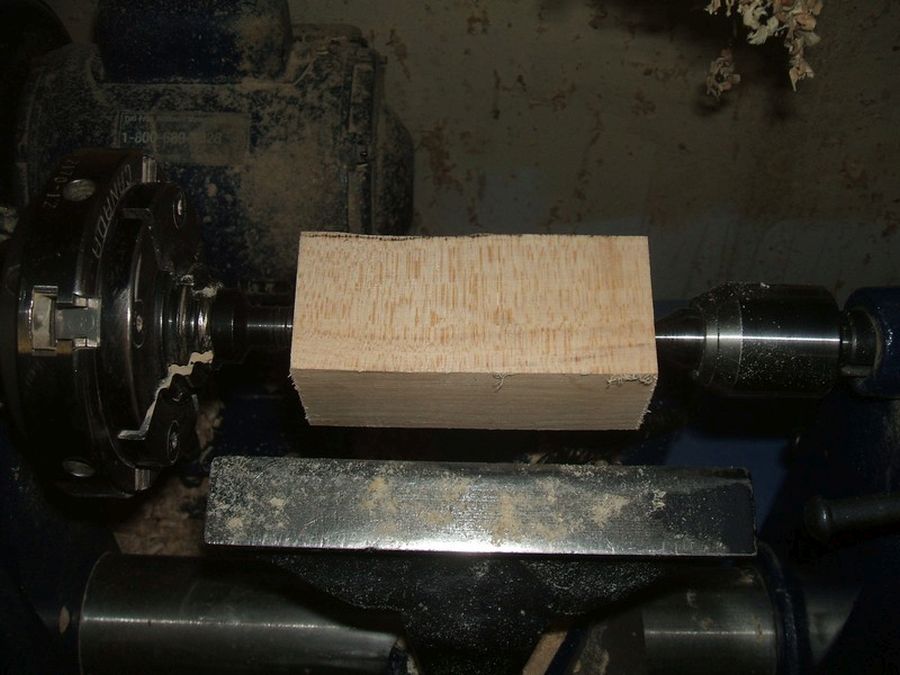
| I have decided that the handle of the awl will be a little more comfortable for my hand if it is 1 1/4" in dameter rather than 1" so I cut a blank over at the band saw to 1 1/2" square x 4" long, and mount it between centers on the lathe. |
|
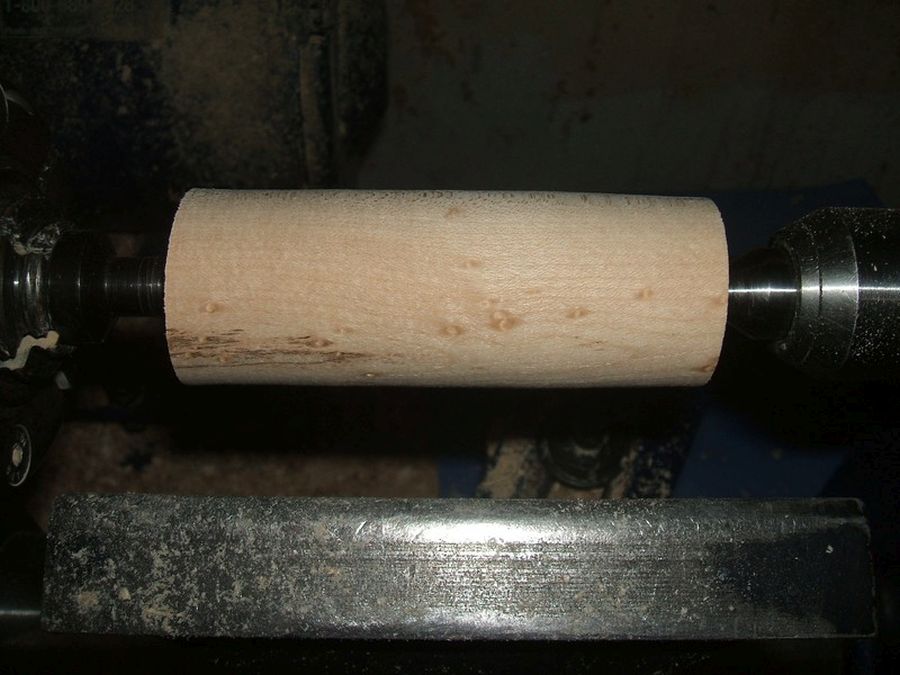
| The blank is mounted between centers and rounded down with the roughing gouge. |
|
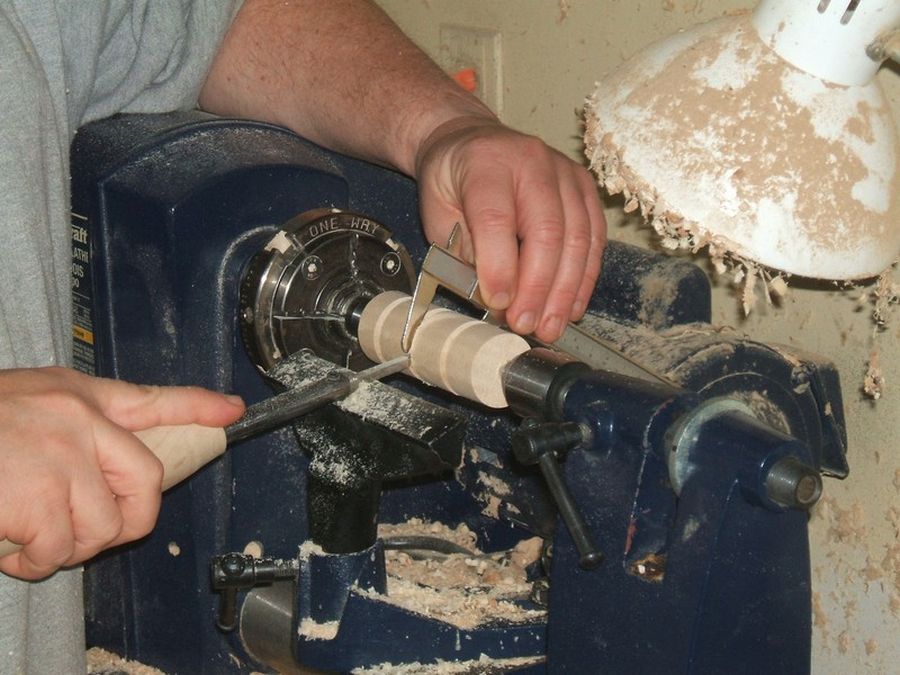
| Using an inexpensive set of calipers set to 1 1/4", use a parting tool to establish the largest dameter. |
|
| Having done so in a couple of places, use the roughing gouge to make the cylinder. |

|
If you have any questions or comments or would like to let me see an awl you have made, let me know over at Round Opinons or send me an email Thanks.
© 2015 copyright Darrell Feltmate, Around the Woods