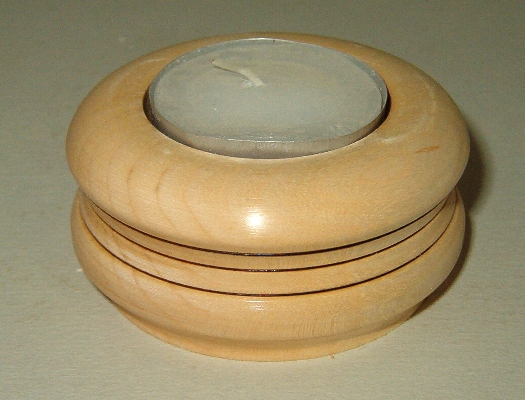
This is really a project to make a tealight holder, but everyone is going to call it a tealight anyway and "tealight holder" is just too much to reapeat all the time. I am just going to use a block of scrap maple that is too small to use for much else but too nice to just burn if you are a compulsive wood junky like me. Once you turn the first one you can see lots of ways to use up the scrapwood box. Like always, if you cick on a picture it will open a larger one a new tab.
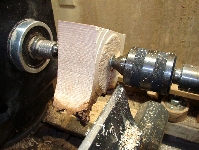
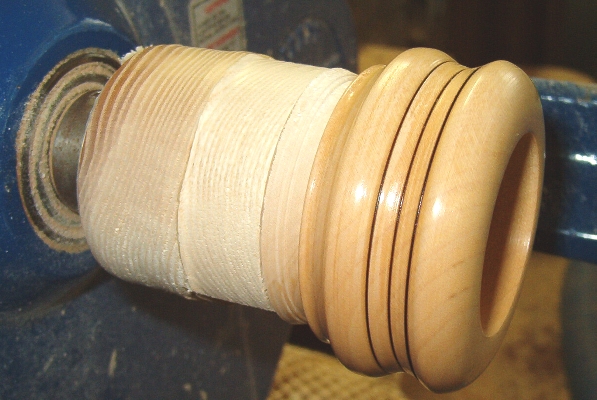
I have taken the scrap block and mounted it between centers on the wood lathe to turn the base flat for a wood block. It would have been possible to use a sander or plane for the same effect but the lathe is fast, makes shavings instead of sawdust and is fun. As you get used to using it you might also easily adjust the piece of scrap to emphsize a certain section of grain or other neat looking place.
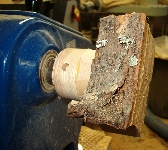
Once the bottom is flat I attach the tealight blank (no longer a piece of scrapwood) to the lathe with glue block. I am using hot glue which I find to be fast and effective in this situation. Double sided woodturner's tape works well but do not use double sided carpet tape. One little catch and you will know why we wear full face shields. Regular white glue will work if you have patience in its setting time and do not mind cutting off the wood block later. I am using a
home made threaded block, but a piece of scrap wood on a face plate works well. I have also moved to my bowl lathe because it is easier to get a good picture there.
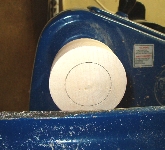
Turn the block round and face it off. This will be the top of your tea light. I am turning at about 1200 and using a 1/4" Oland tool. Slower speeds are fine but anything under 600rpm is likely too slow. Bowl gouges are good here as well. This is faceplate turning and spindle bouges are usually sharpened at too great an angle for safety and effectiveness.
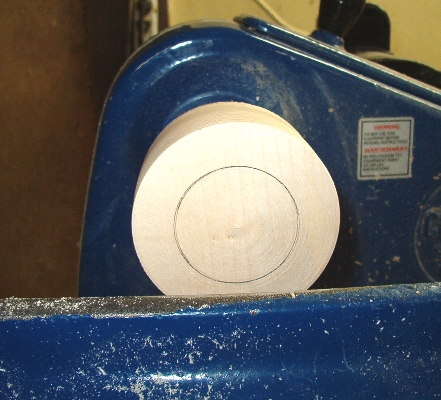
Now measure your insert. It is probably 1 1/2" diameter by 3/8" deep. I like to turn the mortise for the insert a little wider in case someone ends up with an odd sized tea light. I have never seen one a different size but I really do not know if there is an industry standard. To measure the diameter on the block, I use a set of dividers opened to the required diameter. With the lathe running I let the left point of the divider mark the wood while the right point never touches, but visually I check to see if I have the right diameter by moving the left point until the right point would be on the inscribed line if I let it touch. I have darkened the line here with a pencil to make it easier to see.
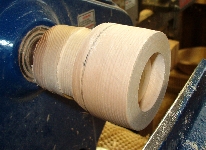
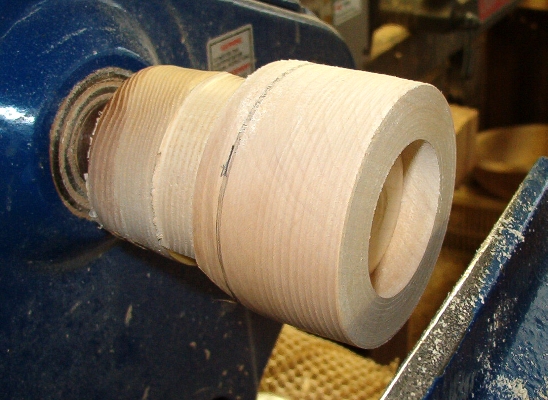
Cut the mortise using a 1/4" bowl gouge or a 1/4" Oland tool. Refine the edges using a scraper or a skew on its side. You can see from the pencil mark near the bottom that I have decided how high I wish the finished piece.
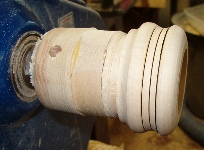
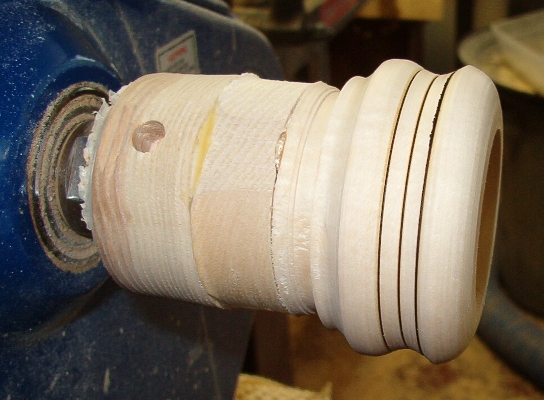
Turn the sides using whatever decoration you like. Cutting in at the bottom line with a parting tool will make it easier to picture the finsihed product. The eyes are stopped by the sharp edge and privent the illusion of farther curves. A little inturn or cove at the bottom will give a sense of lift to the item. This wood is fairly plain so I have decided to incise three lines with a three point tool and burn them with a friction wire.
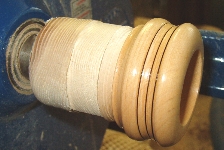
Sand and finish using a turner's polish. Mylands and Hutt are both good or you can
make your own from one part each of shellac from the hardware store, boiled linseed oil, and
denatured alcohol. I have used all three and am happy with each. Brush it on with the
lathe turned off, give a quick wipe, turn on the lathe and polish it in until dry. It only takes a minute. Make sure not to wrap the polishing rag around your fingers. You may want
them later and a cloth that catches fingers and turning wood at the same time is not a
pretty sight.
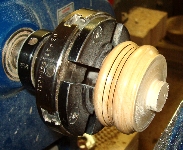
Part the glue block from the piece by parting straight in at the glue line with a parting
tool. Stop when the tenon is about 3/4" to 1" thick. Turn off the lathe and pry the piece
for the block using the parting tool as a pry bar. The heat from the friction of the parting
cut is sufficient to soften the glue enough to remove the piece. If it is too hard to pry,
part in a little farther and try again.
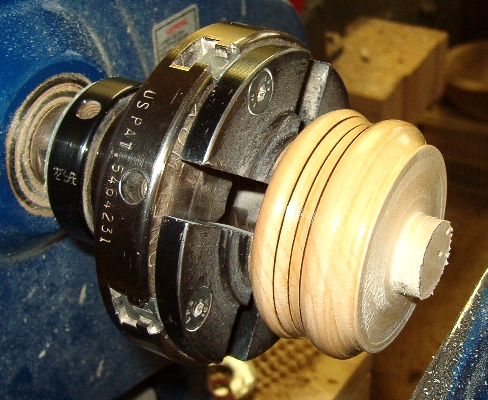
Hold the piece using a four jaw chuck in the mortise or by mounting it on a jam chuck.
For a jam chuck, mount a piece of scrap wood on a face plate and turn it until if just fits
the mortise in the piece. Jam the piece on to it. I have left myself a good minute's work by deciding to leave such a large tenon on the piece.
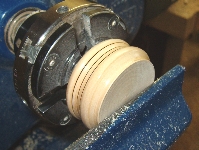
Gently finish cut the bottom of the piece, sand and finish. I have brought the tool rest up against the bottom to emphasize the concave bottom. This will allow the piece to sit flat on its bottom rim.
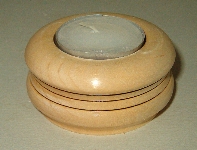
Remove from the chuck or pop it off the jam chuck, sign and admire.
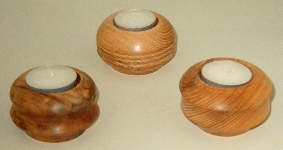
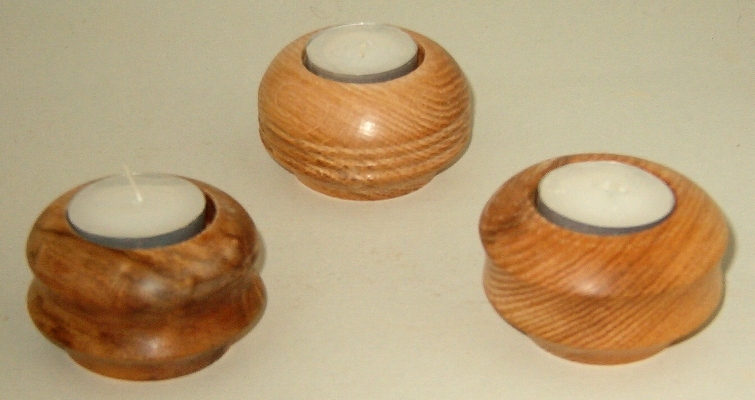
Here are a few of its friends.